
What is the real cost of ongoing Salesforce support and maintenance?
Implementing Salesforce is an exciting milestone for any growing business. But once the system is live, the real work begins.
Your data needs to stay clean. Your automations must keep pace with changing processes. And every few months, Salesforce releases new features that can impact how your system behaves.
That ongoing effort of maintaining, updating, and optimizing your CRM is where many small businesses underestimate both the time and cost involved.
Let’s look at what Salesforce support and maintenance truly mean, what factors drive cost, and how small businesses can manage it efficiently.
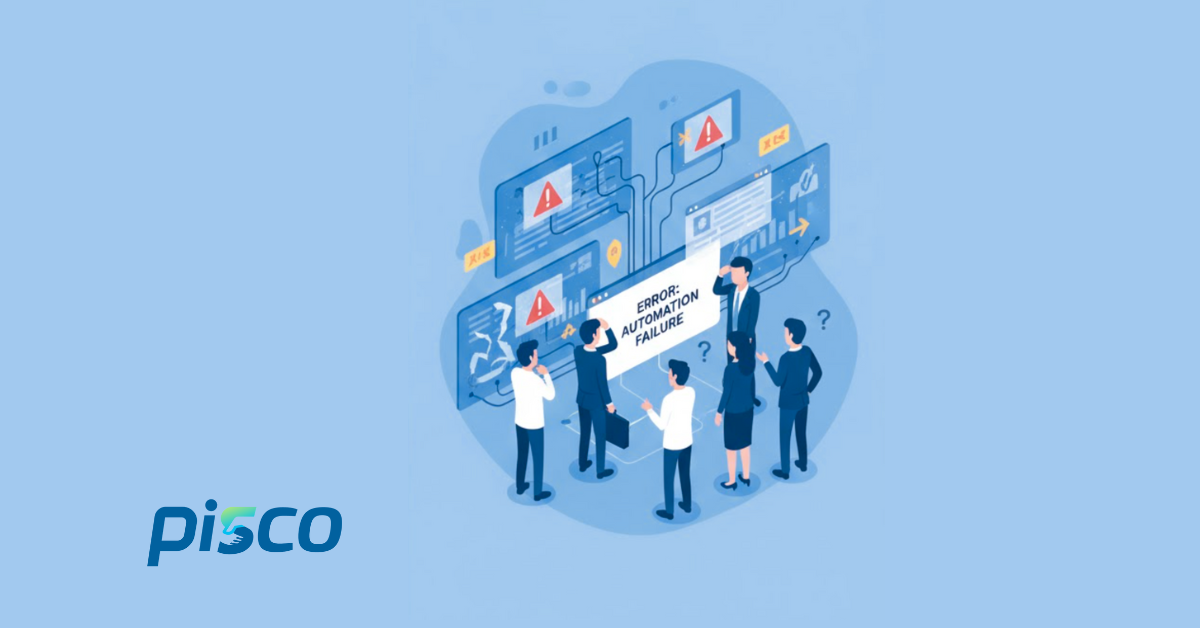
1. The Hidden Cost of a “Set and Forget” CRM
Salesforce is not a one-time project. It is a living system.
Over time, even small configuration changes can introduce complexity. If reports stop matching or an automation fails silently, those small issues can cascade into hours of lost productivity or inaccurate data.
Without ongoing support, your Salesforce environment can slowly drift away from the way your business actually operates.
This gradual decline often leads to workarounds, duplicate records, or the most common scenario, teams stop using the system altogether.
That is not a Salesforce problem, but a maintenance gap problem.
2. What Drives Ongoing Salesforce Costs
The cost of Salesforce maintenance depends on three main factors: complexity, frequency, and ownership.
Complexity refers to how many Clouds you use (Sales, Service, or Marketing), how customized your system is, and how many automations or integrations you rely on.
Frequency covers how often your team requests enhancements or changes. Fast-growing companies typically have constant adjustments to make.
Ownership is about who manages Salesforce internally, whether it is a part-time admin, an external partner, or a managed services provider.
A small organization with one Cloud and basic automation might spend under $3,000 per month for expert management.
A more advanced environment with multiple integrations, dashboards, and user groups can reach $5,000 to $10,000 or more per month, depending on the service level.
The key is to see this not as a support cost but as an operational investment in accuracy, speed, and scalability.
3. Internal Hire Versus External Managed Services
Hiring a full-time Salesforce administrator is a common path once companies reach a certain size.
However, it is important to understand what that entails.
In the United States, the average certified Salesforce Administrator salary ranges from $95,000 to $130,000 annually, excluding benefits and ongoing training.
Small businesses often don’t require a full-time resource dedicated to Salesforce support. And allocating a person across multiple activities is often ineffective and inefficient.
That investment also gives you one person, but Salesforce management increasingly requires multiple skill sets, such as system architecture, security, integration, and user adoption.
This is where managed services have become the smarter alternative for many growing organizations.
They offer access to a team of specialists who can handle tickets, enhancements, security, and reporting, often at a fraction of the cost of one in-house administrator.
4. What Managed Services Actually Cover
A mature managed services model should go beyond simple issue resolution.
At its best, it is a proactive partnership focused on long-term health and continuous improvement.
Here is what that typically includes:
System administration and user support: handling permission updates, workflows, page layouts, and user setup.
Enhancement management: evaluating and implementing changes from your backlog, not just fixing problems.
Health checks and technical audits: preventing data and automation issues before they affect operations.
Release management: preparing your organization for Salesforce’s seasonal updates and new features.
Strategic guidance: helping leadership identify how Salesforce can drive more value rather than simply maintaining the status quo.
At Pisco, our managed services framework called Continuum Hypercare™ is built on these principles. It starts at $3,200 per month and provides dedicated admin support, proactive optimization, and best-practice alignment for small and scaling businesses that want to grow without enterprise overhead.
5. How to Budget for Ongoing Support
The best way to plan for Salesforce maintenance is to include it in your annual operations budget from day one.
This ensures that upgrades, training, and small improvement projects do not get delayed until something breaks.
Think of it like maintaining a high-performance car. You would not drive it for years without oil changes or tune-ups, not because it is failing, but because it deserves to run at its best.
Salesforce is no different.
6. Getting the Most from Your Investment
The real return on investment from Salesforce comes from adoption, visibility, and alignment, not just features.
A managed service partner can help you achieve that by ensuring your CRM evolves with your business, keeps data reliable, and continues to reflect how your teams actually work.
Whether you manage Salesforce in-house or through a partner, the goal should always be the same: clarity in information, confidence in decisions, and systems that scale with growth.
Backed by Enterprise Experience from Equals 11
Pisco is part of Equals 11, an execution-first certified Salesforce consulting firm trusted by both lean teams and complex enterprises.
Clients choose Equals 11 for their ability to turn abstract ideas into clear user stories and decision-ready backlogs, prescribe only what is truly needed, and consistently deliver on time and under budget.
Backed by more than 600 certified Salesforce engineers, Equals 11 is recognized as a Top CRM and Nonprofit Partner three years in a row and a leading AI-driven Salesforce consulting firm.
Their frameworks, delivery standards, and technical depth power Pisco’s Continuum Hypercare™ and Quick Start Implementations, giving smaller businesses access to the same level of excellence that enterprise clients trust.
Verified Client Results
“Our engagement with Equals 11 has been great and just what we needed. We are a small company with limited resources, and this engagement has helped us make our Salesforce environment more relevant and useful.”
— Healthcare & Life Sciences Client, USA | Apr 2025
“The team is willing to step in wherever we need to help make the project successful.”
— Pharmacy Services Client | Jan 2024
“I found the ability for the Equals 11 team to tailor a custom solution within Salesforce to meet our organizational goals in an efficient, professional, and results-oriented way to be impressive.”
— Nick Duquette, VP of IT, National Kidney Foundation
These are the same frameworks and delivery standards that Pisco brings to small and scaling businesses through Continuum Hypercare™. The same quality, adapted for leaner budgets and faster timelines.
Ongoing Salesforce support is not just about maintenance. It is about momentum.
When managed well, your CRM becomes less of a cost center and more of a growth engine.
If your Salesforce environment feels slow, disjointed, or hard to maintain, it might be time to take a closer look at how it is being managed.
Would 20 minutes of your time be worth uncovering how to reduce maintenance costs, improve adoption, and keep your CRM running like it should?
Book a short consultation with the Pisco team today and see what expert Salesforce management could do for your business.
→ Book a 20-Minute Consultation