
Why your sales team still uses spreadsheets instead of the CRM
There is a spreadsheet on someone’s desktop right now called something like “Real Pipeline Q2 FINAL v3.” It holds the deals that matter, the notes nobody trusts Salesforce to keep, and the forecast the VP of Sales reads before they open the dashboard. Salesforce is live. The team logs in every day. But the real selling happens in that file.
That second system has a name. Shadow CRM. It hides in plain sight, looks like productivity, and quietly costs you.
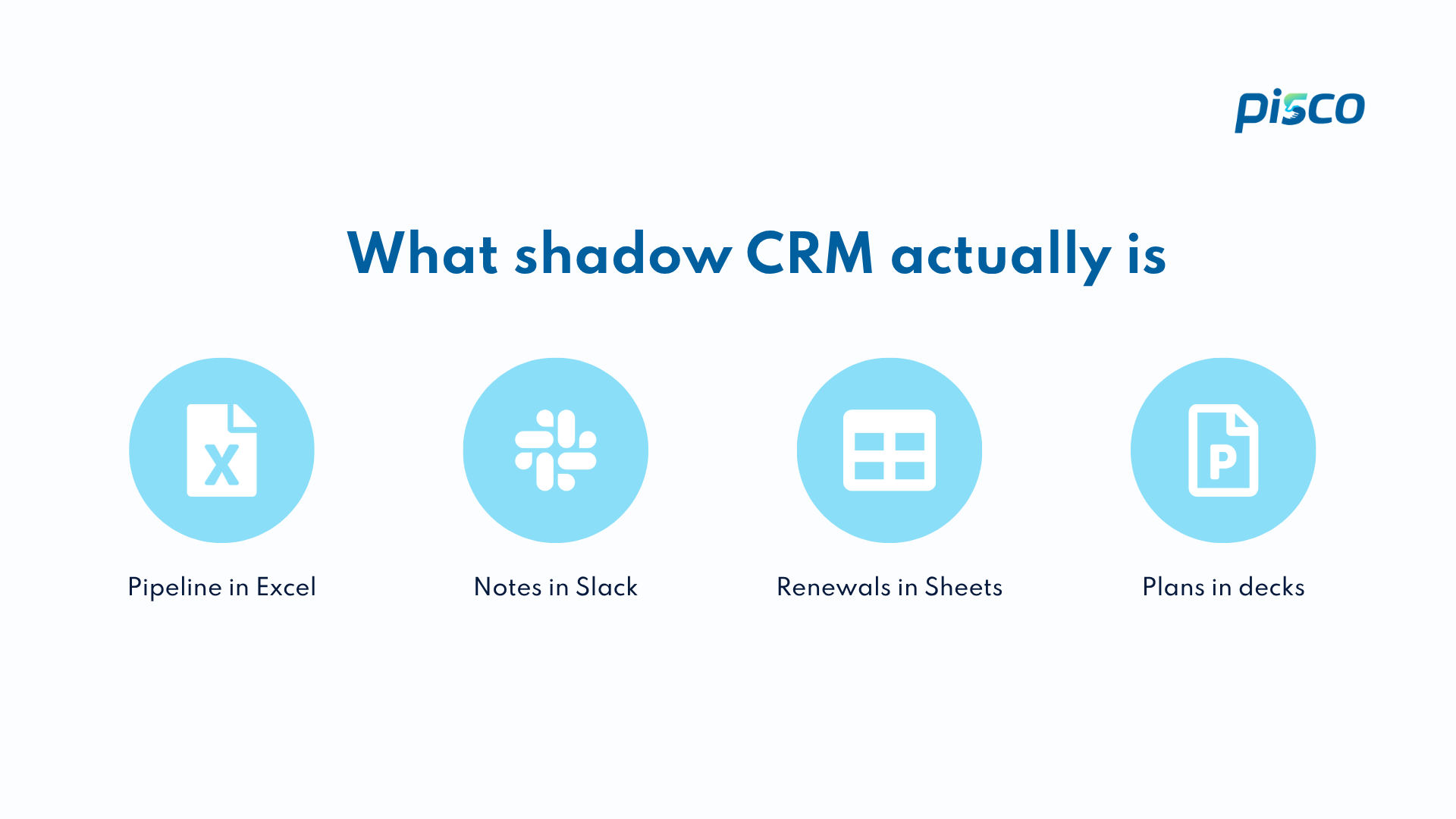
What Shadow CRM actually is
Shadow CRM is any place outside Salesforce where your team tracks the work Salesforce was bought to track. Pipeline in Excel. Customer notes buried in Slack. Renewal dates in a Google Sheet that three people edit and nobody owns. Account plans in a deck are rebuilt every quarter.
It rarely starts as a rebellion. A rep needs a field that does not exist, so they open a spreadsheet. A manager wants a view that the dashboard cannot give, so they export and pivot. Each workaround solves one small problem. Stack a year of them together, and you have a parallel system competing with the one you pay for.
How a shadow file gets born
It is never a decision. It is a Tuesday. A rep needs to track a competitor's name; there is no field for it, and the request would sit in a queue for two weeks. So they open a spreadsheet. The file works, so it does not go away. It gets a tab. Then a teammate asks for the link. Within a quarter, the file is the source of truth, and Salesforce is where you copy things in later, if you remember.
That gap between what the org was built to do and what the team needs today is where shadow CRM is born. Keeping Salesforce aligned to a moving business is the whole point ofmanaged services. When nobody owns that, the spreadsheets fill the gap.
What does it cost you?
Forecasting gets shaky. When the real numbers live in a spreadsheet, leadership plans are based on data, with no system checks, and nobody can trace them. One quarter of surprises, and people stop trusting the forecast.
Reporting falls apart. A dashboard is only as good as what people enter. If half the real activity lives in Slack and Sheets, every report tells half the story. Anything you add later, automation or AI, needs that data in one place to work at all.
Knowledge walks out the door. When the person who keeps the master file leaves, the account history leaves too. The file quietly made one person the system, and that is a fragile way to run a business.
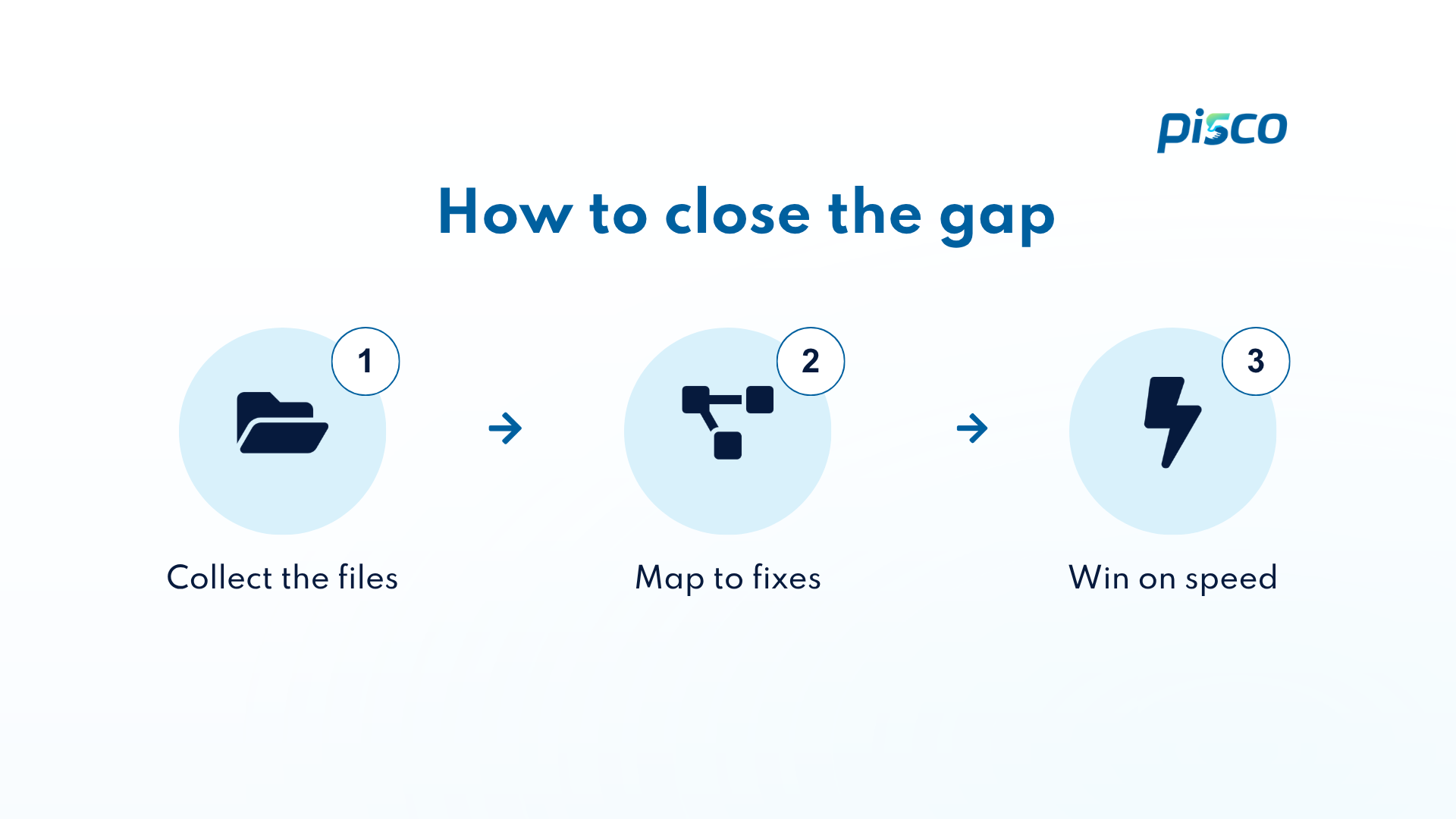
How to close the gap
You do not fix shadow CRM by banning spreadsheets. You find out what the spreadsheet does that Salesforce does not, then make Salesforce do it.
Collect the shadow files first. Every column in them is a requirement Salesforce missed. Map each one to a fix: a field, a cleaner layout, an automation that removes the manual step that pushed people out. The goal is to set Salesforce up to match how the team actually works, so the file has no reason to exist.
People do not run two systems for fun. They run the second one because it is faster today. Beat the spreadsheet on speed, and adoption follows on its own.
Where Pisco fits
Pisco is an Equals11 company built for growing and mid-market teams that need Salesforce to work fast. Out of Excel and into the pipeline. One clean system the team trusts enough to stop keeping a backup.
Not sure how deep your shadow CRM runs? Pisco’s free Salesforce Health Check scores it directly. One of the six things it measures is whether your team is still working off spreadsheets behind Salesforce, and it flags how exposed you are when the person who owns the file leaves. Two minutes to start, results in one business day, no sales pitch. Get yours by clicking here.